Showing posts with label Clemency. Show all posts

Thursday, May 21, 2009

Ohio Death Row


***Please Note***
There has been a statewide inmate mail process change. 

Effective January 30, 2025, all letters and cards from family and friends will now be sent to the ODRC Mail Processing Center (OMPC) at the following address:

Sample Name & Address:
John Doe R111111 or John Doe A555555
Ohio Department of Rehabilitation and Correction
Mail Processing Center (OMPC)
884 Coitsville-Hubbard Road
Youngstown, Ohio 44505

***Death Row has also been moved from Chillicothe to other facilities. You can use the DOC search feature until we get all pages updated. Offender Search

***The JPay email system has been replaced with GettingOut 

*** Commissary (Trust Fund) and Phone (Pin) money can be placed through ConnectNetwork


History Of Capital Punishment in Ohio.

Ohio Death Row Inmate Pages

Capital Crimes Annual Report State and Federal Cases


Capital Justice Initiative: Post Conviction DNA Protocol

Cost of Ohio’s Death Penalty

Scheduled Executions

Clemency

The Execution Process

How Media Is Chosen For Executions

The Executed


Creating More Victims

How Executions Hurt The Families Left Behind

Meet the Exhonerated of Ohio

Possible Claims of Innocence or Wrongful Conviction.

Ohio Death Row Inmates With Online Petitions


Ohio Death Row Inmate Pen Pal Requests


Inmates No Longer on Death Row


Correctional Institutional Inspection Reports
(Links on right hand side of page.)

Related Videos

News and Updates

___________________________________________________________


If you can't find what you are looking for try our Frequently Asked Question Page.

Kenneth Biros *


Murdered by the State of Ohio on December 8, 2009

Kenneth Biros

Race: W
County: Trumbull

This seems to be the most comprehensive, yet troubling, news article;
Killer’s life ends

___________________________________________________________

Supplemental Clemency Report for Kenneth Biros


The reasons for clemency and petitioned under, were;
Kenneth Biros’ family have testified to the emotional abuse he suffered as a child.
He also suffers from depression and schizoid personality disorder.
He did not receive adequate counsel during his trial.

___________________________________________________________

Kenneth Biros News Article Links
(Should not be considered all inclusive)

___________________________________________________________

Home History Inmates Annual Report Justice Initiative Scheduled Executions Clemency Execution Process Media Executed Innocence Exonerated Petitions Pen Pal FAQ Updates
___________________________________________________________

Darryl Durr *


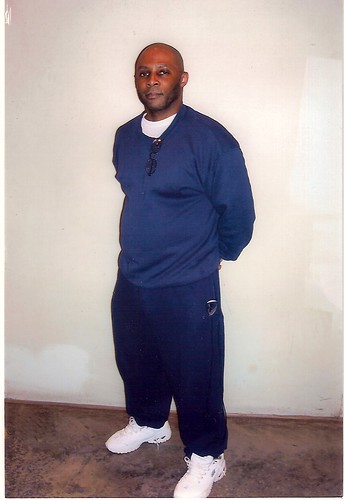
scan0009

Murdered by the State of Ohio on April 20, 2010

Darryl Durr

Race: B
County: Cuyahoga
Clemency Hearing Date: September 30, 2009


Clemency Report


Justice for Darryl Durr
http://justicefordarryldurr.blogspot.com/

I. Inadequacies in Darryl's Legal Proceedings
A. The State's Case rested on the testimony of Deborah Mullins. If Ms. Mullins was telling the truth, she had ample opportunity to go to the police the night Angel Vincent disappeared. Instead she waited over nine months to come forward with her story, at a time where her relationship with Darryl seemed to be breaking apart.
B. The funding for investigative and expert witness assistance was so meager ($500.00) that defense counsel could not obtain the assistance that was needed to find and talk to witnesses and to assist in the mitigation phase of the case.
C. The State failed to turn over reports that included information that would have assisted the defense. These included statements:
a. That the deputy coroner's initial findings concerning the date of death indicated the body had been dead "from days to a couple of weeks". Angel Vincent disappeared on January 31, 1988 and the decomposed body that was later identified as hers was found on April 30, 1988, three months later.
b. An expert opinion that the body was that of a 20 - 30 year old female. Angel Vincent was 16 years old when she disappeared.
c. Police reports that identified other reasons for Angel Vincent's disappearance. The week prior to her disappearance, Angel Vincent had telephoned her father in Texas and expressed her desire to visit him. The authorities had previously charged the decedent with being habitually truant from school. The police treated her January 1988 disappearance as if she had run away.
d. The trial court rushed the case forward to trial. The trial began 53 days after counsel was appointed.
e. The trial court severely limited defense counsel's questioning of potential jurors, and seated a jury in four hours. Voir dire in a capital case usually takes anywhere from three to five days.
f. The racial overtones in the case overshadowed the trial. Darryl Durr is African American. The victim was a young Caucasian female. Deborah Mullins was a white female as was Darryl's common - law wife Janice Jackson Durr. During a break in the trial proceedings, the judge stated that he "wanted to see Darryl's black person ass in the chair for messing with white women". A police officer told Darryl's stepfather that he did not like him "because I was like Martin Luther King".
g. Trial counsel failed to investigate Darryl's family life and background in anticipation for the penalty phase of the case as is required by the ABA Guidelines for Capital Counsel in the Representation of those charged with an offense punishable by death. After Darryl was convicted, the case proceeded quickly to the penalty phase. The defense called Darryl's mother and his common law wife. Defense counsel failed to present a cohesive mitigation case and to explain to the jury information to give Darryl less than a defense sentence.
II. Defense Counsel were ineffective in the Penalty Phase
A. Counsel representing the capitally charged must meet minimum standards of proficiency - both in defending against the state's charges and in convincing the sentencer that death is not the appropriate sentence.
B. Counsel failed to investigate and conduct a thorough review of Darryl's background.
C. Counsel failed to present the following information to the jury, because they failed to investigate:
a. Tammy Jackson was a friend of Darryl's and a former girlfriend. She stated in her affidavit that Darryl was a nice person and he was never physically or verbally abusive to her and was never disrespectful.
b. Charles Johnson was Darryl's step-father. Mr. Johnson could have testified concerning some of the attitudes and experiences of a black man. He also could have discussed incidents from Darryl's childhood that would have humanized Darryl in the jury's eye.
c. Michael Durr was Darryl's older brother. Michael could have related what Darryl's childhood was like and his perceptions of Darryl's childhood.
d. Denise Durr was Darryl's older sister. She indicated that her father used to beat her mother. She spent time watching Darryl while her mother worked. Darryl found out as an older child that he had a different father (Eddie Wright) than the one who lived in the house. Darryl was very proud of his son and daughter and was a good father.
D. Counsel failed to obtain the assistance of experts
a. A social worker or mitigation specialist: This person is responsible for the gathering of records relating to the client's life including education and employment records. They also locate and interview persons, who are familiar with the client, be it family, friends, employers, teachers, etc. The mitigation specialist then creates a social history or overview of the client's life to aid defense counsel in creating a strategy for the penalty phase. No such person was retained, documents located, or social history created.
b. An independent psychologist: This person could have done psychological interviews and testing of Darryl. In state post-conviction, Dr. James Eisenberg examined Darryl and obtained the following information.
i. Darryl Durr is a 28 year old, single African-American male. He describes himself as an extremely private person who was quite naive about racism. Mr. Durr has shown a preference for white women beginning in his late adolescent years and had little or no understanding of the intolerance that he might experience from both the black and white communities. He grew up in a family with inconsistent discipline and little supervision. He never knew his biological father and lacked appropriate male role models through much of his childhood. He was mostly supervised by his siblings. During his early teens he spent much time away from home without any serious consequences upon his return. His family seemed somewhat "unconcerned" about his absences and would give him a bath upon his return. It appears that everyone within Darryl's immediate family were isolated emotionally from each other, though they loved each other.
ii. As a result of his emotional isolation from his family, Darryl grew up with strong feelings of ambivalence concerning relationships. Ambivalence, in this sense, is a psychological state noted by the existence of mutually conflicting feelings or thoughts, such as hate or love together, about the same person, object, or idea. Without adequate understanding of emotions, feelings, or even sexual tensions, Darryl responds to the external world often with opposing forces.
iii. The Minnesota Multiphasic Personality Inventory - 2 (MMPI - 2) is a standardized questionnaire which elicits a wide range of self descriptions that are scored to give a quantitative measurement of an individual's level of emotional adjustment. Mr. Durr responded to the test with sincerity and a normal degree of expressiveness. The profile is likely to be valid. Individuals obtaining similar profiles have difficulties around the issue of impulse control and setting limits. They tend to be impulsive and overactive. Individuals with similar profiles experience repeated failures in interpersonal relationships. Although dependent and having strong needs for affection, they are anxious much of the time, feel easily threatened, and are overly suspicious of others. They have difficulty expressing emotions in a modulated fashion. There is also an extraverted, active, and outgoing quality to the overall MMPI-2 profile. There are no indications of any underlying thought disorder. There are no indications of any involvement with drugs or alcohol.
iv. Records reveal little in the way of any singularly traumatic event. His family pretty much let him do what he wanted. In his early schooling, Darryl had a rather optimistic attitude towards the world as reflected in his own statement written for the Diocese of Cleveland. In my opinion, this optimism ended when he began dating white women. He was then confronted with racial issues from both the black and white communities and had little ability to cope with those reactions and his own feelings. His family is not one to talk about these kinds of things. As such, Darryl's developing ambivalence towards these relationships resulted in confusion and a lack of identity, with the accompanying psychological defense mechanisms of denial and projection. These are defense mechanisms used to ward off the feelings of anxiety, isolation, and rejection.
v. Defense Counsel's presentation of mitigation excluded a psychological explanation of Mr. Durr and gave the jury no professional understanding of his life history and the developmental consequences he experienced as a result of his immediate family environment. Without such an explanation, the jury had no understanding of Mr. Durr's life, his particular family background, his strengths, his weaknesses, or of any underlying psychological issues. All the jury heard at mitigation was the testimony of his mother and ex-wife and an unsworn statement by the defendant which rarely sheds light on psychological issues.
vi. It is my opinion, with reasonable scientific certainty, that a psychologist's testimony at mitigation would have provided the jury additional and necessary information upon which to deliberate as to whether or not the aggravating factors outweighed the mitigation factors. At a minimum, a psychologist's input into mitigation was necessary for the attorneys to develop a meaningful and coherent strategy. At the time of this mitigation, December 12, 1988, psychologists were available for the specific evaluation of capital defendants for purposes of providing testimony at mitigation. Without such testimony, the jury had no understanding of the defendant, his personal development history, his strengths and weaknesses, his psychological functioning, and the way in which these possible mitigating factors related to the crime and the aggravating factors.
vii. It is my opinion, with reasonable scientific certainty, that Mr.Durr's lack of appropriate role models, absence of a biological father, emotionally isolated family, and his early environment should have been presented to the triers of fact and would have been considered as a mitigating factor under Section (B) (7) of the O.R.C. 2929.04.c. An expert on cross-cultural racial issues: Dr. Judith Skillings, a clinical psychologist with a specialty in cross-cultural racial issues also provided an affidavit for Durr's post conviction petition. Dr Skillings lengthy affidavit shed light on issue present in Darryl's case, which involved his relationships with three white women. She could have explained to the jury some of the reasons that Darryl seemed to be drawn to white women, other than his own attorneys’ explanation that he had to either be a drug dealer or a pimp. She could have also testified concerning racial issues that are not well known or understood by white people.
E. Counsel failed to act as an advocate on Darryl's behalf in the penalty phase:
a. trial counsel gave a one (1) page opening statement in which they never discussed any of the legal aspects of mitigation, the burden of proof, or offered any defense theory of the case.
b. trial counsel called only two witnesses, Darryl's mother and his common law wife (whose testimony had already been rejected by the jury in the trial phase of Darryl's case), because they had not interviewed other members of Darryl's family or other significant others in his life.
c. trial attorneys developed no theory of mitigation and had no organized method for examining the mitigation witnesses.
d. counsel gave a three (3) page closing argument in which they improperly discussed all mitigating factors, including those not raised by the Darryl.
e. counsel went through the first six mitigating factors listed in R.C. 2929.04(B)(1)-(6) and told the jury that none of them applied, implying he had no mitigating evidence.
f. In regard to the final mitigating factor listed in R.C. 2929.04(B)(7), counsel told the jury that he did not know what this mitigating factor meant, but if it had "any applicability at all," it might include residual doubt about Darryl's guilt.
g. counsel limited the jury's consideration of mitigation to one factor only, and then further limited this final factor to residual doubt. Then counsel further conceded that residual doubt may not even be a "legally" appropriate matter to consider under R.C. 2929.04(B)(7). In so doing defense counsel once again made the State's argument for the State.
h. trial counsel also failed to provide the jury with any plausible explanation as to why Darryl would be involved in a relationship with two white women at the same time, conceding instead that this was a "very unusual relationships."
i. Trial counsel failed to make appropriate objections to the prosecuting attorney's closing argumentj. Trail counsel failed to make appropriate objections to the jury instructions
III. Darryl has made productive use of his time on Ohio's Death Row
In the 20 years that Darryl has been on Ohio's Death Row, he has made the following contributions and enhancements to other lives:
A. He developed a ongoing friendship and "marriage" with Gina Vincente, a woman in the Philippines.
B. He became a legal clerk and tutor to other inmates. He has studied civil law to be able to assist incarcerated fathers to get contact and/or custody of their children and to preserve their parental rights. Darryl, on his own, filed many legal documents concerning his own child Angel Durr. Angel's mother, Deborah Mullins, lost custody of Angel in 1991 because of drug abuse and neglect.
C. In his early years on death row he staged a hunger strike to get the cells of the inmates painted since they were dirty.
D. He regularly donates what he can to the international charity "Toy Box" that sells children's handicrafts that are then sold with the money going to the children.
E. He helped Filipino burn victims May and Myla Santiago to get medicine and school supplies. Along with Gina, he tried to help them come to the United States for treatment at the Shriner's Hospital.
F. He is assisting another Filipino woman to prepare to go to college for nursing school by assisting them through the paperwork maize and application process.
G. He has developed a close relationship with a Filipino family that considers Darryl a father and grandfather and tries to help them with school supplies.
H. He mentors prisoners by helping them join the African Methodist Episcopal Church, and the African Hebrew Israelites.
I. He writes letters to "at-risk" youth at the African Methodist Episcopal Church to help them stay on the right path.
J. He helps fellow inmates to get things they need or want like books and to draft the paperwork necessary to get medical help.
K. He helps fellow inmates with their legal proceedings.
L. He helped to prevent a possible assault-murder of CO Propst by encouraging prisoners to go to OSP psychologist Dr. Ceremiele. The psychologist was then able to talk to the administration and to stop CO Propst from further harassing prisoners and destroying their property which was creating a hostile and dangerous environment. CO Propst was eventually fired for this and assaulting another guard.
M. He has filed many grievances to try to improve the conditions of all inmates on death row.
____________________________________________________
Some abbreviated speaking points are listed below.
Trial counsel was ineffective for failing to:
Interview members of his family and obtaining a social history.
Object to portions of the State's closing argument.
Object to allegedly improper jury instructions.
Obtain experts for mitigation.
Trial counsel stated because the court would not cover the costs for a pathologist, criminalist, psychologist, or mitigation specialist, they didn’t attempt to get any sort of expert where a psychologist would have provided the jury with mitigation evidence.

___________________________________________________________

Darryl Durr News Article Links
(Should not be considered all inclusive)
___________________________________________________________

Home History Inmates Annual Report Justice Initiative Scheduled Executions Clemency Execution Process Media Executed Innocence Exonerated Petitions Pen Pal FAQ Updates
___________________________________________________________

Gregory Lott


Scheduled Execution:  March 12, 2020
Gregory Lott  # A 198547
Ohio Department of Rehabilitation and Correction
Mail Processing Center (OMPC)
884 Coitsville-Hubbard Road
Youngstown, Ohio 44505

Ross Correctional Institution (RCI)

DOB:  6/25/61
County; Cuyahoga

***The Ohio Parole Board has voted favorably 6-2 for clemency for Greg Lott. The final decision for clemency now goes to Governor DeWine.
Parole Board Report 
https://drc.ohio.gov/Portals/0/Gregory%20Lott%20Death%20Penalty%20Clemency%20Report%20and%20Recommendation.pdf?fbclid=IwAR2GqHZ-CiFhq01iUHEqbU2DDJIspOsrB04ut00FQEvs2OQ1mJS1Fei89gY
April 8, 2020

Innocence Claims;

Lott's attorneys argued that Lott didn't get a fair trial, saying the prosecutor in the case withheld evidence that would have proven his innocence.
That evidence included McGrath's description to police of his killer. On his death bed, McGrath said the man who killed him was a light-skinned black man with long hair; Lott is a medium- to dark-skinned black man with very short hair.
U.S. District Judge Kathleen O'Malley eventually rejected Lott's claims and said he didn't deserve a new trial.


___________________________________________________________

News articles related to Gregory Lott
(Should not be considered all inclusive.)

___________________________________________________________


Email Gregory Lott
You will need this number to find him within the email program;
A198547

Please note;
GettingOut Email Option
The Ohio Department of Rehabilitation and Correction has begun using an innovative electronic mail system. To be clear, this program does NOT provide inmates with direct email access. Rather, it allows those who wish to correspond with an inmate to enter into a subscription through a third-party website, at a cost, and that company will serve as the vehicle to manage emails. These emails should not be considered confidential.

___________________________________________________________

Home History Inmates Annual Report Justice Initiative Scheduled Executions Clemency Execution Process Media Executed Innocence Exonerated Petitions Pen Pal FAQ Updates
___________________________________________________________

Lawrence Reynolds


Murdered by the State of Ohio on March 16, 2010

Lawrence Reynolds


Race: W
County: Summit
___________________________________________________________
Clemency Hearing Date: September 10, 2009

Clemency Report

___________________________________________________________

Links to News Articles Related To Lawrence Reynolds

___________________________________________________________

Home History Inmates Annual Report Justice Initiative Scheduled Executions Clemency Execution Process Media Executed Innocence Exonerated Petitions Pen Pal FAQ Updates
___________________________________________________________
Wednesday, May 20, 2009

Clemency


If you can't find what you are looking for try our
Frequently Asked Question Page.


Executive Clemency can only be granted by the Governor of the State of Ohio. Section 2967.07 of the Ohio Revised Code requires that all applications for clemency be made in writing to the Adult Parole Authority. The Ohio Parole Board is the bureau of the Adult Parole Authority assigned to process clemency applications. The Governor may also direct the Parole Board to investigate and examine any case for the propriety of clemency.
Upon completion of its examination, the Parole Board sends a report to the governor providing a summary of the facts in the case, a recommendation for or against the granting of clemency, and the reasoning behind the recommendation. Clemency can be in the form of a pardon, commutation, or reprieve:

Pardon

A pardon is the remission of a penalty. It is an act of grace or forgiveness that relieves the person pardoned from some or all of the ramifications of lawful punishment. A pardon may be conditional or unconditional.

Commutation

Commutation is the substitution of a lesser for a greater punishment. A commutation may be conditional or unconditional.

Reprieve

A reprieve is the temporary postponement of the execution of a sentence.
The granting of clemency has historically been infrequent and should not be considered a routine post-conviction remedy. Only the person seeking clemency or their legal representative can apply for clemency.
_____________________________________________________

For Clemency Hearing Dates;
http://www.drc.ohio.gov/Public/executionschedule.htm

For published clemency reports;
http://www.drc.ohio.gov/Public/clemency.htm

Parole Board;
http://www.drc.ohio.gov/web/parboard.htm

Parole Board Members
http://www.drc.ohio.gov/web/PBMembers.htm

_____________________________________________________

Past clemency decisions;

    Year 1991
    Debra Brown
    Rosalie Grant
    Elizabeth Green
    Leonard Jenkins
    Willie Jester
    Beatrice Lampkin
    Donald Lee Maurer
    Lee Seiber

    Reason for Decision
    Citing a "disturbing racial pattern" in death sentencing, Gov. Richard Celeste granted clemency to eight death row inmates as he was leaving office. Celeste stated that he selected cases based on the inmates' crimes, the fairness of sentences, mental health and IQ, and length of time served.


    Year 2003
    Jerome Campbell

    Reason for Decision
    Governor Taft concurred with the Pardon and Parole Board recommendation based on doubts regarding DNA evidence unavailable at trial.
    (Associated Press, June 26, 2003).
    See also; 2003: Saving a Life
    The Story: “Bloody Shoes and Snitches,” issue of April 9, 2003


    Year 2008
    John Spirko

    Reason for Decision
    Gov. Ted Strickland reduced Spirko's death sentence to life without parole. In his statement granting clemency, the governor cited "the lack of physical evidence linking him to the murder, as well as the slim residual doubt about his responsibility for the murder that arises from careful scrutiny of the case record." (Warrant of Commutation, Governor of Ohio, January 9, 2008)


    Year 2009
    Jeffrey Hill

    Reason for decision
    Governor Ted Strickland commuted Hill's death sentence to 25 years to life, following the Ohio Parole Board's unanimous recommendation that Hill not be put to death. In granting clemency, Gov. Strickland expressed his agreement with the board's findings: "the views of the victim’s family, the lack of adequate representation by counsel at Mr. Hill’s sentencing, the remorse demonstrated by Mr. Hill regarding his actions, the lack of proportionality of the sentence of death in this case when compared with similar murder cases, and the expressed views of two justices of the Ohio Supreme Court which reviewed this case on appeal." (Governor's Statement Regarding Clemency Application of Jeffrey D. Hill, February 12, 2009).

    2010
    On June 4, 2010, Governor Ted Strickland, in agreement with the recommendation from the Ohio Parole Board, commuted the sentence of inmate Richard Nields to life without the possibility of parole.
    http://ohiodeathrow.blogspot.com/2009/05/richard-neilds.html

    Kevin Keith
    On September 2, 2010, Governor Ted Strickland commuted the sentence of inmate Kevin Keith to life without the possibility of parole.

    http://ohiodeathrow.blogspot.com/2009/05/kevin-keith.html

    Sidney Cornwell
    On November 15, 2010, Governor Ted Strickland commuted the sentence of inmate Sidney Cornwell to life without the possibility of parole.

    http://ohiodeathrow.blogspot.com/2009/05/sidney-cornwell.html

    2011
    Shawn Hawkins
    On June 8, 2011, Governor John Kasich commuted the sentence of Shawn Hawkins to life in prison without the possibility of parole.
    http://ohiodeathrow.blogspot.com/2009/05/shawn-hawkins.html

    Joseph Murphy
    On September 26, 2011, Governor John Kasich commuted the death sentence of Joseph Murphy to life without parole.
    http://ohiodeathrow.blogspot.com/2009/05/joseph-murphy.html

    _____________________________________________________

    Please see Ohio Scheduled Executions for a list of inmate pages that may have ongoing clemency actions. When a clemency petition becomes available we place a link to it on each inmates page.

    _____________________________________________________

    In addition to signing online petitions, emails and written letters to the parole board, the governor, and his adviser, on behalf of the inmates with execution dates are encouraged. Include the inmates name and inmate number on your correspondence and send to:

    Ohio Parole Board 
    770 West Broad Street
    Columbus, Ohio 43222
    Email; DRC.publicinfo@odrc.state.oh.us

    Governor Kasich
    Riffe Center, 30th Floor
    77 South High Street
    Columbus, OH 43215-6108

    Phone: (614) 466-3555
    Fax: (614) 466-9354

    Online
    _____________________________________________________


    Additional Resource; Ohio Parole Board Guidelines Manual (65 pages; effective July 1, 2007) you may download this document as a PDF file from this site. Note: You must have Adobe Acrobat Reader to view these documents.

    Source; http://www.drc.state.oh.us/WEB/ExecClemency.htm

    Additional source; http://www.deathpenaltyinfo.org/clemency

    Links to Clemency Petitions can be emailed to;
    ohiosdeathrow@cox.net


    ___________________________________________________________

    Home History Inmates Annual Report Justice Initiative Scheduled Executions Clemency Execution Process Media Executed Innocence Exonerated Petitions Pen Pal FAQ Updates
    ___________________________________________________________